ACP Free Tablet Update: What Changed After ACP Ended
Direct answer: In 2026, there are still pathways that may help qualified applicants access device related offers, but there is no guaranteed tablet for everyone. The practical route is to confirm eligibility, compare provider terms by ZIP code, gather documents, and submit one accurate application. This guide explains realistic next steps for readers researching ACP tablet update.
Updated April 2026
People often find conflicting information when researching tablet benefit programs. Some pages are current and helpful, while others rely on outdated details or simplified claims. A good process starts with expectations. Approval is not automatic. Providers evaluate eligibility, local availability, and documentation quality. A complete file set and realistic timeline often matter more than headline promises.
Lifeline remains active and mainly provides service discounts. Device offers may appear under some provider terms, but those terms can change over time. Because conditions vary, you should verify details close to the time you apply. A checklist mindset keeps the process manageable and helps you avoid common errors that can delay review.
What changed after ACP ended
ACP ended on June 1, 2024. Any page that suggests ACP is still active for new tablet benefits is outdated or unclear. Readers should treat those claims carefully and verify current provider terms directly before submitting an application.
Old ACP tablet claims may still rank in search results because many pages have not been updated. Instead of relying on outdated references, focus on current pathways: check Lifeline context, confirm provider availability in your ZIP code, and use the eligibility guide to prepare your records.
Core factors that shape outcomes
| Factor | What to review | Why it matters |
|---|---|---|
| Eligibility route | Income based or program based pathway | Determines whether you can proceed |
| ZIP coverage | Local provider availability | Offers may differ by area |
| Inventory | Current stock and shipping pace | Device model and timing may vary |
| Documents | Readable and matching records | Cuts down avoidable delays |
| Terms | Current provider conditions | Prevents surprises after submission |
Preparation steps that improve clarity
Start with eligibility to confirm your pathway. Then review documents and gather files with matching details. Next, compare options in providers, including coverage and inventory. If your path intersects with Lifeline context, review lifeline to understand what is usually covered. Finally, return to the homepage and submit one complete application.
Keep a local folder with files named clearly, such as identity, address proof, and program or income proof. Use readable scans or photos. Save confirmation screenshots and dates after submission. If a follow up request arrives, organized records help you respond quickly and reduce confusion.
Comparing provider terms with confidence
When you compare providers, prioritize transparency over marketing language. Look for clear eligibility criteria, local coverage notes, inventory status, and support contacts. If details are vague, keep comparing. The most reliable path usually comes from providers that explain requirements in plain language and publish updates when terms change.
You should also compare practical details such as processing time, shipping expectations, and replacement terms. These details may matter more than a promotional headline. A realistic comparison helps you choose options that fit your situation rather than chasing uncertain promises.
Common mistakes to avoid
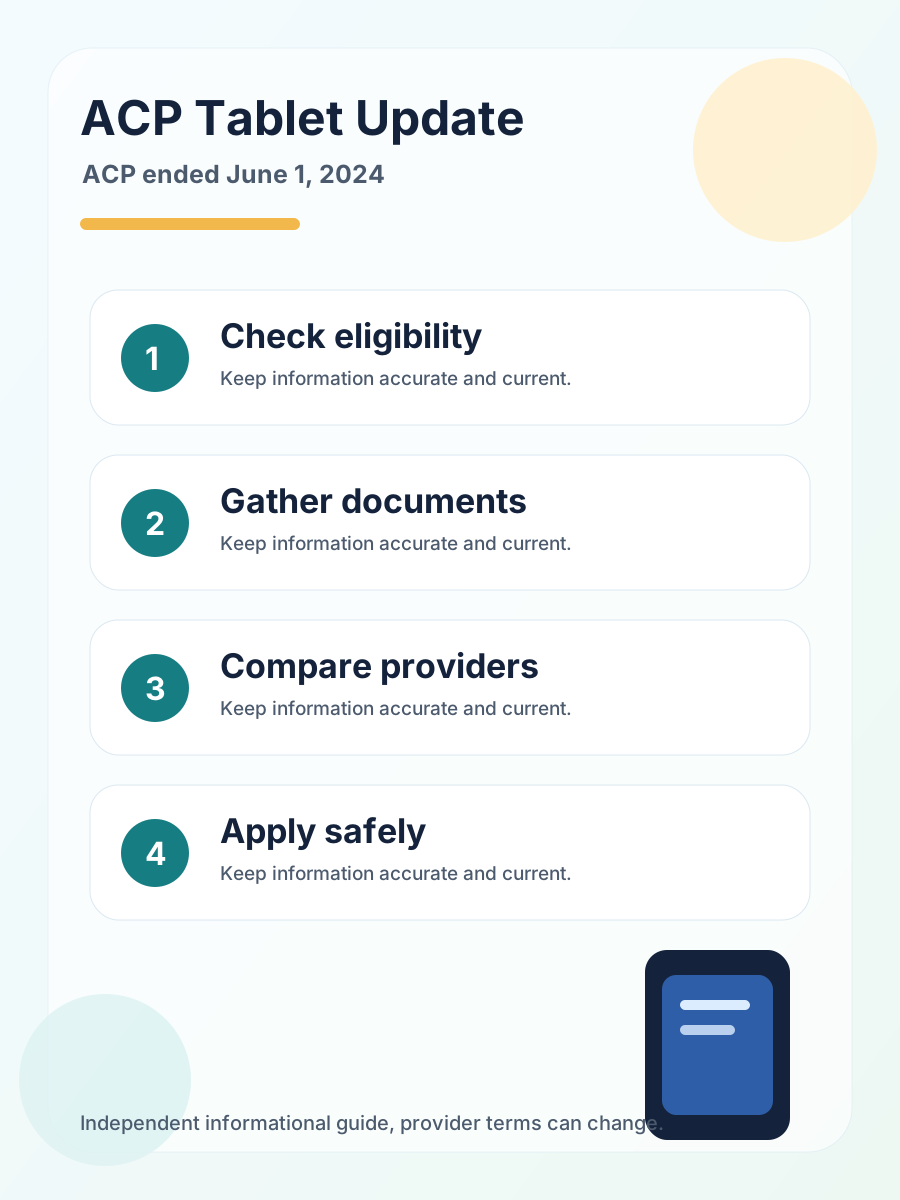
A frequent issue is applying before documents are ready. Another is submitting mismatched details across forms and files. Some applicants also skip ZIP verification and apply to providers that do not serve their area. To avoid these outcomes, use a fixed order: eligibility check, document preparation, provider comparison, then submission. This sequence may feel slower at first, but it saves time later.
Another common issue is relying on old articles or social posts that do not reflect current rules. Always verify dates, especially on program updates. If terms seem unclear, pause and recheck official provider details. A careful process protects your time and lowers stress.
Action steps you can take today
- Confirm pathway in eligibility.
- Prepare records in documents.
- Compare local options in providers.
- Review Lifeline context in lifeline.
- Use the homepage flow to submit one complete application.
Final checklist before submission
Verify that every uploaded image is clear and every personal detail matches. Confirm current provider terms on the same day you apply. Keep copies of all records and confirmation pages. If additional proof is requested, respond with consistent files from your saved folder. This approach improves clarity and reduces avoidable delays.
Detailed planning notes for applicants
A practical application plan has three phases. Phase one is research. In this phase, you confirm current eligibility pathways, verify ZIP specific availability, and identify which providers publish clear terms. Phase two is preparation. You gather identity, address, and program or income records in readable form, then validate that all personal details match exactly. Phase three is submission and follow up. You submit once with complete information, save confirmation records, and answer any follow up requests quickly with consistent files.
Most delays happen between phase two and phase three, when documents are incomplete or mismatched. To reduce this risk, compare each form field with your supporting records before you click submit. If your address appears in different formats across documents, prepare a supporting record that confirms the same location. If your name includes a middle initial on one file but not another, align entries where possible. These details make verification smoother and lower the chance of repeated requests.
Timing also matters. Provider terms and inventory can shift, especially when local demand rises. A guide you read last month might not match current conditions today. Before final submission, do a same day check of eligibility notes, service area, and stock related terms. A short verification pass can prevent a long restart later. This simple habit is one of the most effective ways to improve outcomes while keeping expectations realistic.
Quick self-audit before submission
- I confirmed my eligibility route with current criteria.
- I verified ZIP coverage with the provider I plan to use.
- I prepared clear files for identity, address, and eligibility proof.
- I checked that names and addresses match across records.
- I saved a copy of every uploaded file and confirmation page.
Related guidance to keep your application on track
- Go back to the main guide and compare your next steps
- Review qualification pathways before you submit anything
- Use the full document checklist for cleaner uploads
- Compare provider terms and local availability side by side
- Understand what Lifeline usually covers today
For current non-ACP pathways, see the 2026 government tablet guide.
FAQs
Can everyone get a free tablet offer?
No. There is no universal guarantee. Eligibility, ZIP coverage, inventory, and provider terms all affect outcomes.
Is ACP still active?
No. ACP ended on June 1, 2024.
What should I verify before applying?
Confirm eligibility, gather clear documents, compare provider terms, and then submit one complete application.
Where should I start now?
Start with eligibility, review documents, compare providers, and check Lifeline context before submitting.