Free Tablet With Medicaid: What Actually Works in 2026
Direct answer: You may be able to get support toward a tablet in 2026, but there is no universal guarantee for everyone. The practical path is to confirm your eligibility route, review provider options in your ZIP code, gather clear documents, and submit one accurate application. This guide explains what actually works, what changed after ACP ended, and how to avoid common mistakes while looking for free tablet with Medicaid options.
Updated April 2026
Many readers search for terms like free government tablet, free tablet from government, or free government phone and tablet, expecting a single official program that guarantees a device. In reality, offers are fragmented. They depend on provider participation, local service maps, stock, and whether your documents support eligibility. The fastest way to avoid frustration is to use a checklist approach. First, understand which pathway applies to your household. Next, verify ZIP availability. Then prepare documentation before you submit. This approach lowers delays and helps you compare options with clear expectations.
Another common source of confusion is older content about ACP. ACP ended on June 1, 2024. Because old pages still circulate online, readers may run into outdated claims. A better approach is to treat any page with strong promises as a warning flag and confirm current terms. Lifeline is still active and mainly provides service discounts. Some providers may pair service discounts with occasional device promotions, but those promotions are not fixed nationwide benefits. They change by region and inventory cycles.
What actually drives your result
Your result usually depends on five practical factors. First is your eligibility pathway. Some providers use income based criteria while others allow qualifying program participation. Second is ZIP coverage. Provider maps can change, and nearby ZIP codes can have different offers. Third is inventory. Even if you qualify, the specific model offered may change week to week. Fourth is documentation quality. Blurry uploads or mismatched names can trigger delays. Fifth is timing. Offers and processing windows can shift, so it helps to verify terms immediately before submission.
Quick comparison table
| Factor | What to check | Why it matters |
|---|---|---|
| Eligibility route | Income or qualifying program records | Determines if you can proceed with application review |
| ZIP coverage | Exact service availability in your area | Some providers do not serve every ZIP code |
| Inventory status | Current in stock devices and shipping windows | Offer quality can change week to week |
| Document quality | Readable and matching identity details | Reduces delays and re-submission requests |
How to prepare before submission
Preparation has a direct effect on outcomes. Start by visiting our eligibility guide and confirming which route applies to your household. Then open the documents checklist and gather readable files that match your legal name and address. After documents are ready, compare at least two options in the provider guide. If your plan includes Lifeline context, read the Lifeline page so you understand what is normally covered. Finally, return to the homepage for the full application sequence in one place.
When uploading files, check image clarity and ensure the date on your records is recent enough for review. Use consistent information across all form fields. If one document shows a different address format, add supporting records when possible. Small mismatches are a major source of avoidable delays. Also keep copies of everything you upload, including timestamped screenshots of confirmations. This record helps if you need support later.
How to compare provider terms with less guesswork
Comparison is not only about getting a device. It is about choosing a path you can manage after approval. Review monthly plan details, replacement policies, shipping timelines, and customer support channels. Ask whether device inventory is currently available for your area or if you may be waitlisted. Look for clear language about any recurring conditions. If terms are unclear, that is a sign to keep comparing.
It also helps to check the provider communication style. Reliable options usually publish clear instructions and update notices. If you cannot find straightforward documentation requirements, you may encounter delays. Prioritize providers that explain eligibility and document standards in plain language. Remember that a flashy promise is less important than a transparent process.
Common mistakes and how to avoid them
The most frequent mistake is treating every online claim as current. Because the policy landscape has changed, many pages are outdated. A second mistake is applying without documents ready. This often leads to incomplete applications and repeated requests. A third mistake is submitting inconsistent personal details across records. Even minor differences can slow down verification. A fourth mistake is ignoring ZIP specific limits. People often compare offers that are not available locally. A fifth mistake is trusting urgent messages that push immediate action without clear terms.
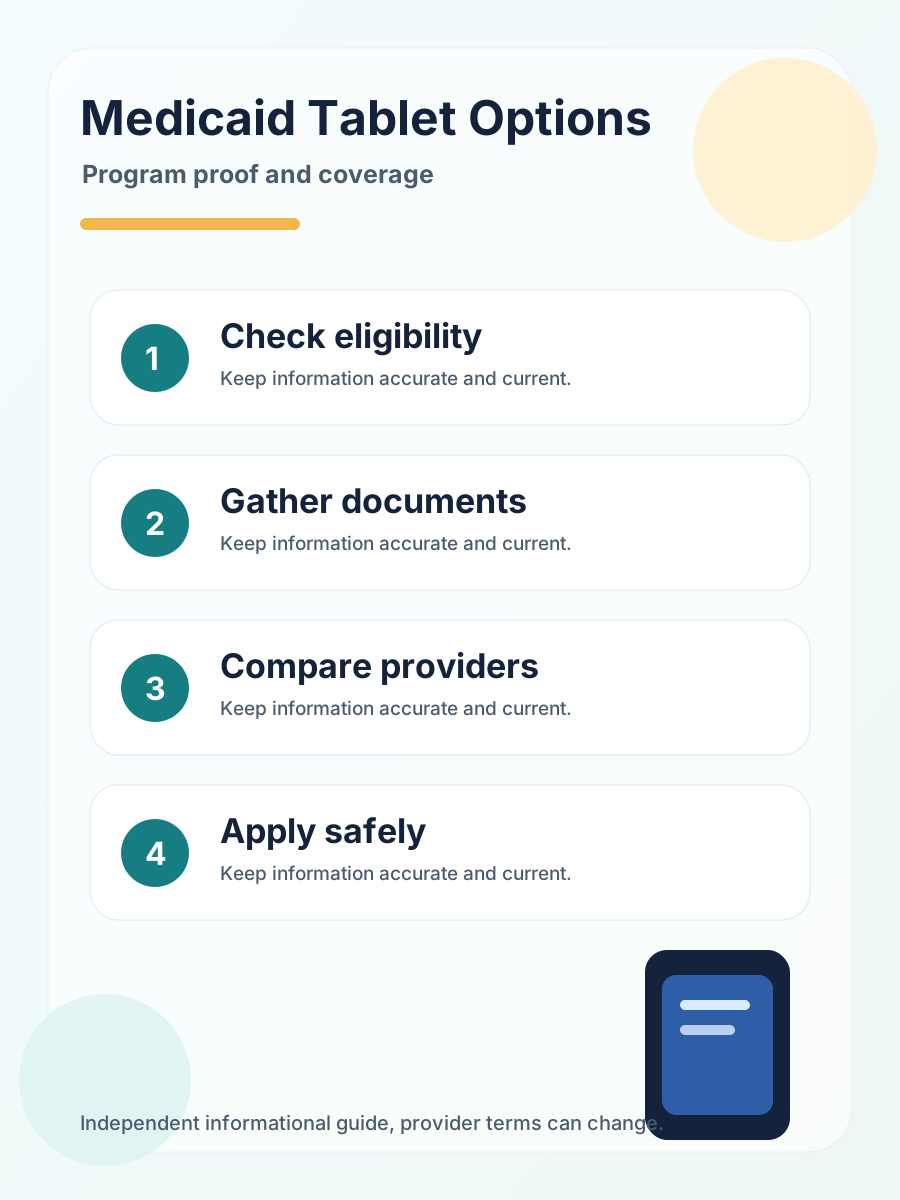
To avoid these issues, create a simple review checklist before submission. Confirm eligibility route, confirm ZIP coverage, verify inventory, verify document quality, and then submit once with matching information. If a provider asks for additional proof, respond quickly with clear files. This disciplined process improves your odds of a smooth review and helps you avoid unnecessary resets.
Safety and scam prevention
Scam risk rises when people are rushed. Be careful with pages that claim guaranteed approval, guaranteed tablets, or fake official status. Avoid sharing sensitive information on websites that do not clearly identify ownership and policy terms. If a message asks for unusual payment before any verification step, pause and review. You can reduce risk by using established provider pages, keeping records of submissions, and checking links from trusted navigation paths on this site.
It is also wise to separate research from submission. Research using educational guides first, then submit through a provider process you can verify. If uncertain, step back and review the documents page and provider comparison page again. A careful approach may take a little longer, but it can prevent mistakes that cost more time later.
Practical next steps
If you are ready to move forward, take these steps today. Confirm your route in eligibility. Gather and review files in documents. Compare options in providers. Review program context in Lifeline. Then use the action flow on the homepage to submit confidently. This framework keeps expectations realistic and aligns your application with how reviews are typically handled in 2026.
Need a focused paperwork path? Use the tablet documents guide before you submit.
FAQs
Can everyone get a free tablet?
No. Approval is not guaranteed. Outcomes depend on eligibility, ZIP coverage, provider terms, and current inventory.
Is ACP active in 2026?
No. ACP ended on June 1, 2024.
Should I apply with more than one provider at once?
It is usually better to compare first and submit one complete application with accurate documents to avoid confusion.
Where should I start before applying?
Start with the eligibility guide, collect documents, compare provider options, and then submit.